[fourcol_three]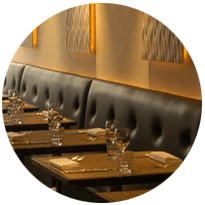 As restaurants compete for new business, they have to attract customers by not only offering good food, but also creating a welcoming atmosphere. As many restaurant owners know, changing things up on the menu every now and then is good for business. What many are just now learning is that remodeling a restaurant also has significant financial rewards.
According to KNG.com, restaurants generally see a 6% to 8% increase in sales traffic following their remodeling. The remodels cost from $100,000 to $1 million depending on the type of business and scope of remodel. Since so much money is involved in a restaurant remodel, restaurant owners and contractors should have a solid understanding of what makes a restaurant remodel successful.
[/fourcol_three][fourcol_one_last][box]Would you like some help?
BuildZoom can help you connect with the right contractors, get the right bid and eliminate your risk.
Tell us a little about your project to get started.[/box][/fourcol_one_last]
[hr]
The Design Phase
Address all issues during the design phase. Fabian Videla of Smarter Investment Corp recommends addressing fire code issues (exits, emergency lights, alarms, etc.), HVAC concerns (including hoods, exhausts and A/C), plumbing issues (drainage, grease traps, ADA bathrooms, etc.), electrical issues (sizing panels for current loads and future use, lighting, etc) and building issues (accessibility issues, ADA restrooms, fire codes, design issues (just because it looks nice on paper doesn’t mean it will be easy to build ). Videla asserts that this approach saves the owner lots of money by minimizing/eliminating change orders and most importantly, helps the owner open faster which will allow him/her to start making money faster.
[hr]
The Exterior
Focus on the exterior first. According to Michael Fraembs of TNM Builders, remodeling the exterior of a restaurant is one of the best investments that a restaurant can make in their business. “100% of potential customers see the outside of your restaurant. People are less likely to want to go into a restaurant that looks decrepit and run-down,” says Fraembs.
[hr]
The Interior
Plan out your space. Fraembs advises making the workspace more user efficient. People (servers, customers, hostesses, busboys) are always moving around in restaurants. You’ll want to make sure that you have enough space for everyone to comfortably move during peak business hours. Think about how close you want your tables to be to each other. This will depend on your clientele. A small tapas restaurant might have tables closer together than a large family-focused restaurant.
Consider enhancing your bar. Alcohol sales can account for upwards of 50% of a restaurant’s revenue. Typically, bar patrons don’t mind sitting a little bit closer together, nor is there the need for space to put high chairs. By emphasizing the bar area and maximizing space, restaurant owners can draw more patrons into the bar and in turn, increase alcohol sales.
Determine ceiling height. Not only does ceiling height add to or decrease from the ambience and feel of a restaurant, but also affects acoustics. Will your restaurant play music? How many people do you expect to be there during busy hours? These are al things to consider when figuring out ceiling height.
[hr]
Lighting
Analyze your lighting needs. Again, this is based on what type of restaurant you have. The lighting in an upscale Italian restaurant will be very different than that of a casual burger joint. Your contractor should work with an electrician to make sure there is adequate lighting for your customers and employees.
[hr]
Structural changes
Limit major structural changes. According to Lisa Kong, a studio director and project manager for hospitality projects with the Los Angeles office of the Gensler design firm, “budgets can get out of control when we start talking about plumbing and mechanical changes or moving walls.”
[hr]
Fire protection
Don’t forget to make sure that your fire system is up to code. During a remodel, especially one in which new equipment is added or changes have been made to the electric system, it is imperative to make sure that the sprinkler system, fire suppression system, and fire alarms are up to code, according to Oscar Fernando Agguire Llamas of Quick Response Fire Protection.
Don’t overlook the grease interceptor (aka “grease traps”). The purpose of the gravity grease interceptor is to reduce the amount of animal and vegetable fats, oils and greases in wastewater to acceptable levels as established by the authority having jurisdiction. According to Spec Development LLC, “these units should be provided with easy access for maintenance, be sized to hold large quantities of grease (to reduce pumping/cleanout costs) and be outdoors to facilitate easy inspection and reduce the possibility of food contamination during cleanout.” Solidified grease can cause sewer blockages and overflows that pose unnecessary health hazards as raw sewage backs up into residence or commercial establishments. A properly plumbed and maintained grease interceptor will protect sewer systems from these occurrences.
Article by Zoe Zorka
[box]Would you like some help?
BuildZoom can help you connect with the right contractors, get the right bid and eliminate your risk.
Leave a Reply